


Solid Wood Furniture Guides and Buying Advice
How to choose a bed: a buying guide

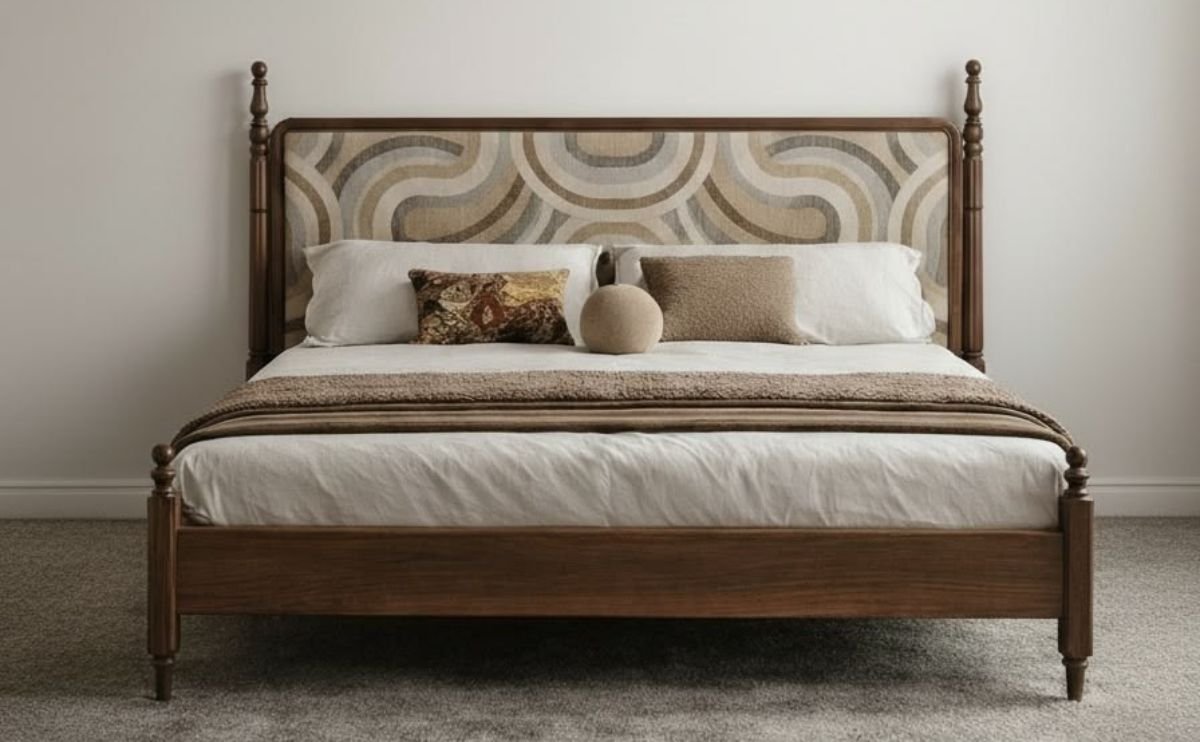
Indian bed sizes are not the same as US or UK sizes
This trips people up constantly, especially when buying a mattress separately or importing a bed frame. Indian standard sizes run:
- Single: 36 × 75 in (91 × 190 cm)
- Double: 48 × 75 in (122 × 190 cm)
- Queen: 60 × 78 in (152 × 198 cm)
- King: 72 × 78 in (183 × 198 cm)
An Indian king is wider than a US king is deep, and an Indian queen is not interchangeable with a US queen. Always confirm the frame’s internal dimensions against the mattress in inches before ordering either one.
If anyone sleeping in the bed is over about 6 ft, look for a 78 in length as a minimum and consider a custom 84 in frame.
Fitting the bed to the bedroom
Leave at least 60 cm of walking space on both sides of the bed and at the foot. Below that the room becomes an obstacle course in the dark. If the room will not allow it, push one long side against a wall and accept that one person will climb over the other, or drop a size.
Also measure the headboard height against your window sill. A tall poster or upholstered headboard that cuts across a window looks wrong and blocks light.
Frame types
Platform beds
A slatted or solid base that takes the mattress directly, with no box spring needed. Lower, simpler, and the most common choice now. Check slat spacing: gaps wider than 7 cm will let a foam mattress sag between them and can void the mattress warranty.
Storage beds
Either drawers in the base or a hydraulic lift-up mechanism. In Indian apartments this is often the single most useful piece of storage in the house. Hydraulic beds hold much more than drawers but need clearance above to open, and the gas struts wear out after roughly five to eight years — ask whether they are replaceable before you buy.
Poster beds
Four uprights, with or without a canopy. They anchor a large bedroom and look overwhelming in a small one, though a slim-profile poster in light cane reads much lighter than a heavy carved one. Our Mandor cane poster bed in teak finish is the version we recommend for rooms that need presence without bulk.
Upholstered beds
Soft to lean against for reading. Choose a removable or at least cleanable cover; headboards collect hair oil and are miserable to clean in place.
Materials
Sheesham and teak are the two solid woods worth paying for: both are dense, resist termites reasonably well, and can be repaired. Mango wood is a lighter, cheaper solid option that dents more readily. Engineered board with a laminate finish is the budget choice and will do the job, but it swells irreversibly if it gets wet, which matters in humid or monsoon-prone homes.
Whatever the material, the joint between the side rail and the headboard is the part that fails. Bolted metal-to-metal connectors are strong and re-tightenable. Wooden dowels alone will loosen and squeak.
The squeak test
Bed squeaks come from joints, not mattresses. In the showroom, sit heavily on one corner and shift your weight side to side. Then do it again near the headboard. Any noise you hear now will be a nightly noise later. Ask whether the fittings can be tightened with an ordinary Allen key, because eventually they will need to be.
Buying the mattress with the frame
Two things to match. First, the mattress thickness against the headboard: a 20 cm mattress on a frame designed for 15 cm will swallow a third of the headboard. Second, the base type — memory foam and latex need a solid or closely slatted base, while spring mattresses are happier with a bit of flex.
What to spend
Below ₹20,000 you are buying engineered board and simple fittings. From ₹20,000 to ₹60,000 gets you solid wood or a well-built storage bed. Above ₹60,000 you are paying for hardwood, hand-finishing, or a hydraulic mechanism worth trusting. Budget the mattress separately and generously; it affects your sleep far more than the frame does.
Browse beds and poster beds, or book a showroom visit to compare storage mechanisms in person.

 Arm Chairs
 Dining Chairs